

Toyota AWD vs. 4WD: What’s the Difference?
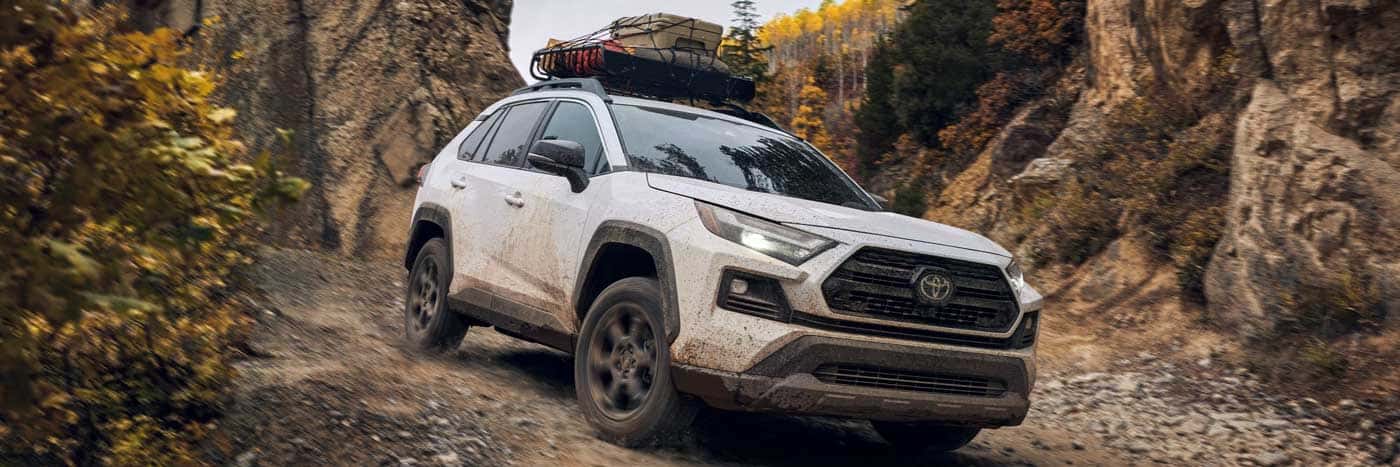
AWD vs. 4WD: Which Toyota Drivetrain Is Right for You?
Toyota builds some of the most capable and dependable cars, trucks, SUVs and minivans on the road, and choosing the right drivetrain is one of the most important decisions you’ll make. All-Wheel Drive (AWD) and Four-Wheel Drive (4WD or 4×4) are often confused, but they’re engineered for very different jobs. Whether you drive in Birmingham, Trussville, Hoover or communities across Central Alabama, the team at Serra Toyota can help you match the right system to how you actually drive.
How All-Wheel Drive Works
AWD continuously manages torque delivery to all four wheels without driver input. Most Toyota AWD systems operate primarily in front-wheel drive for efficiency, then automatically send torque rearward when sensors detect wheel slip, hard acceleration or reduced traction. Because there’s no transfer case or low-range gearing, AWD is optimized for paved roads, delivering better stability on wet pavement, in light snow and through corners.
Toyota uses two main AWD architectures:
- Electronic On-Demand AWD: Found on Toyota hybrids, this system uses a dedicated rear electric motor to drive the rear axle with no mechanical driveshaft. It delivers instant rear torque while preserving hybrid fuel economy.
- Mechanical AWD: Used on select gas models, this system routes torque through a driveshaft and electronically controlled coupling to the rear axle.
AWD is available or standard on a wide range of Toyota models, including the all-hybrid Camry, Corolla Hybrid, Prius, Crown, Crown Signia, RAV4, Corolla Cross, Highlander, Grand Highlander, Sienna, the electric bZ, bZ Woodland and C-HR, and the rally-bred GR Corolla with its GR-FOUR system.
How Four-Wheel Drive Works
4WD is built for low-traction, off-road conditions. A transfer case splits engine torque between the front and rear driveshafts. In part-time 4WD, engaging 4WD mechanically couples both axles so they rotate at the same speed, maximizing traction in mud, sand, rock and deep snow. Most Toyota 4WD systems also offer a low-range gear (4LO) that multiplies torque for crawling, steep grades and recovery situations.
Part-time 4WD is engaged by the driver through a switch or dial and should stay in 2WD on dry pavement, since locked axles cause driveline binding in turns. Some Toyota grades offer full-time 4WD with a locking center differential, allowing 4WD use on any surface. Trail-focused trims add electronic locking rear differentials, Multi-Terrain Select and Crawl Control for even more capability.
Toyota’s 4WD lineup includes the Tacoma, Tundra, 4Runner, Sequoia and Land Cruiser, which comes standard with full-time 4WD. Hybrid powertrain options are available through Tacoma i-FORCE MAX, Tundra i-FORCE MAX and 4Runner i-FORCE MAX.
AWD or 4WD: How to Choose
- Choose AWD if most of your driving is on paved roads and you want automatic, hands-off traction for rain, occasional snow and confident highway handling with strong fuel economy.
- Choose 4WD if you head off-road, tow heavy loads, hunt, fish, camp or regularly face unpaved, muddy or steep terrain. For serious trail use, look at TRD Off-Road, TRD Pro and Trailhunter grades on Tacoma and 4Runner.
Not sure which fits your lifestyle? Explore our new Toyota inventory, browse used vehicles and Toyota Certified Used Vehicles, or check current new vehicle specials. Every new Toyota from Serra includes Serra’s Free Lifetime Warranty with unlimited-time, unlimited-mile powertrain protection, so your drivetrain is covered for as long as you own it.
Frequently Asked Questions
Is AWD the same as 4WD?
No. AWD automatically distributes torque to all four wheels as needed and is designed for paved roads. 4WD uses a transfer case, often with low-range gearing, to lock the front and rear axles together for maximum off-road traction.
Can I drive in 4WD on the highway?
With part-time 4WD, you should only use 4WD on loose or slippery surfaces. Using it on dry pavement can cause driveline binding and accelerated wear. Toyota models with full-time 4WD and a center differential can be driven in 4WD on any surface.
Does AWD reduce fuel economy?
Slightly, due to added weight and driveline components. Toyota’s Electronic On-Demand AWD on hybrids minimizes this by using a rear electric motor instead of a driveshaft, so AWD hybrids like the Camry and RAV4 still deliver excellent efficiency.
Is AWD enough for Alabama weather?
For most Central Alabama drivers, yes. AWD provides added stability during heavy rain and the occasional ice or snow event. Pair it with quality tires for best results. Check our service specials for current tire offers.
Which Toyota has the most capable 4WD system?
The Land Cruiser, 4Runner TRD Pro and Trailhunter, and Tacoma TRD Pro and Trailhunter are Toyota’s most trail-ready models, offering features like locking differentials, Multi-Terrain Select, Crawl Control and off-road-tuned suspension.
Do AWD and 4WD systems need extra maintenance?
Yes. Transfer case, differential and coupling fluids should be serviced at Toyota’s recommended intervals. Review the maintenance schedule or schedule service with our factory-trained technicians.
Ready to feel the difference? Visit Serra Toyota at 1300 Center Point Parkway in Birmingham or contact us to schedule your test drive today.
0 comment(s) so far on Toyota AWD vs. 4WD: What’s the Difference?